Proof of Stake vs Proof of Work: The Future of Cryptocurrency
As the world continues to embrace digital currencies, understanding the mechanisms that power these currencies is crucial. With estimates indicating that approximately
Understanding Proof of Work (PoW)
Proof of Work is the original consensus mechanism introduced by Bitcoin in 2009. It involves solving complex mathematical puzzles to validate transactions on the blockchain. Miners compete to be the first to solve these puzzles, and the first to succeed gets to add a new block to the blockchain, receiving cryptocurrency as a reward.
How Does PoW Work?
- Miners solve cryptographic puzzles.
- The first miner to solve the puzzle adds a block.
- Each successful addition of a block rewards the miner.
While PoW has proven to be a secure method for validating transactions, it comes with notable drawbacks.
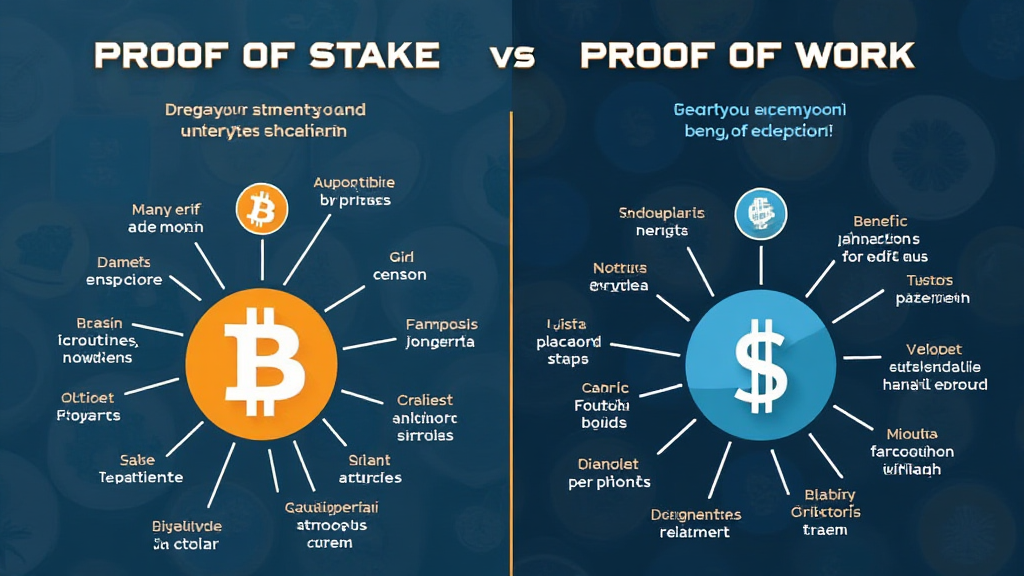
Challenges of Proof of Work
- High energy consumption: The process requires significant computational power, leading to increased energy use.
- Centralization risks: Large mining pools can dominate the network, undermining the decentralization ethos of blockchain.
- Delayed transaction times: As the network grows, the time taken to confirm transactions can increase.
Understanding Proof of Stake (PoS)
As an alternative to PoW, Proof of Stake was developed to address some of the key issues associated with energy consumption and transaction speeds. In PoS, validators are chosen to create new blocks based on the number of coins they hold and are willing to “stake” or lock up as collateral.
How Does PoS Work?
- Validators are chosen based on their stake in the network.
- Creating new blocks requires significantly less energy.
- Users earn rewards based on the amount of cryptocurrency locked in the stake.
The mechanism fundamentally changes the way transactions are validated and has several advantages.
Advantages of Proof of Stake
- Lower energy consumption: PoS requires far less electricity, mitigating the environmental concerns associated with PoW.
- Faster transaction speeds: With no complex puzzles to solve, transactions can be confirmed quickly.
- Greater decentralization: Stakeholders have a more significant influence in the network compared to large mining operations.
Proof of Stake vs Proof of Work: A Comparative Analysis
Now that we understand both consensus mechanisms, let’s compare them directly.
| Feature | Proof of Work | Proof of Stake |
|---|---|---|
| Energy Consumption | High | Low |
| Transaction Speed | Moderate | High |
| Security | Robust but vulnerable to 51% attacks | Generally secure but can be prone to other exploitation |
| Decentralization | Risk of centralization | Encouraged through staking |
Global Landscape and the Vietnamese Market
According to recent data, the cryptocurrency user base in Vietnam is projected to grow significantly. The local population has shown a deep interest in both Proof of Stake and Proof of Work. With the Vietnamese government becoming more open to digital currencies, this growth is expected to have a lasting impact on the market. For instance, many Vietnamese investors are looking for
The Role of PoS in Vietnam’s Crypto Scene
The introduction of PoS has allowed smaller Vietnamese investors to participate more evenly in the crypto world, easing entry barriers that PoW historically imposed.
Future Trends: The Shift Towards Proof of Stake
As environmental concerns continue to dominate discussions around cryptocurrencies, PoS is gaining traction. Investors increasingly value projects that prioritize sustainability. Moreover, significant platforms like Ethereum are transitioning to PoS, further emphasizing its potential long-term benefits.
What’s Next? How to Audit Smart Contracts
As you dive deeper into crypto investments, learning about how to audit smart contracts will prove invaluable. Smart contracts enforce the rules established in blockchain systems and need rigorous scrutiny to ensure their reliability.
Conclusion: Which is Better – Proof of Stake or Proof of Work?
The answer may vary depending on individual needs and perspectives. For energy-conscious investors or those seeking quicker transaction times,
Ultimately, understanding these mechanisms enables you to make informed decisions in your cryptocurrency journey. As the Vietnamese market develops and users become more educated, it’s essential to be equipped with the right knowledge. By doing so, you can navigate this rapid landscape and uncover opportunities that align with your goals.
For more insights and resources related to cryptocurrency, visit hibt.com. Stay ahead of the curve in this evolving space with our tailored insights.
Invest wisely and always consult local regulators for the latest updates. This is not financial advice.
Written by Dr. John Smith, a renowned blockchain expert with over 15 published papers in this field and leader of multiple high-profile audit projects.